AI & Automation Consulting

Reduce repetitive handling with practical AI and workflow automation. We help SMEs and teams assess suitable tasks, connect existing tools and test a focused pilot with clear human oversight.

What we provide

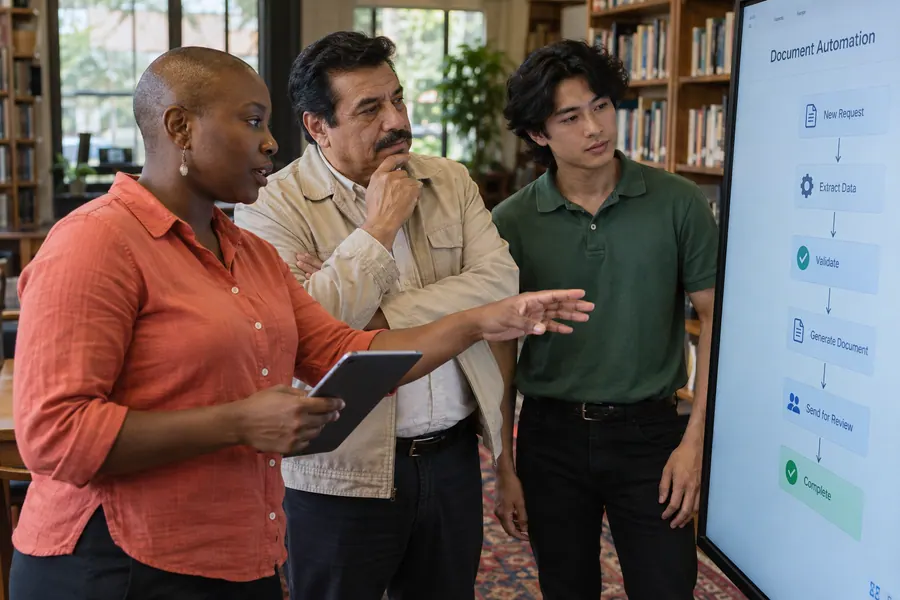
Illustrative scene: AI workflow design and human review

Teams often repeat manual steps across disconnected tools, while ambitious AI ideas remain detached from data quality, governance and the people who must trust the result.

  • AI opportunity and workflow assessment
  • Document and knowledge-work assistants
  • Process automation and system integration
  • Human-in-the-loop review design
  • Responsible AI controls and operating guidance

We begin with a defined workflow and decision, assess data and risk, then prototype the smallest useful automation before planning a controlled production path.

Who it helps

  • SMEs with repetitive administrative workflows
  • Startups validating an AI-enabled product feature
  • Teams seeking practical AI adoption guidance
  • Organisations that need governed automation across existing tools

Intended outcomes

  • A prioritised automation opportunity map
  • Less avoidable manual handling in the selected workflow
  • Clear human review and escalation responsibilities

Scope, prerequisites and handover

Before work starts, we agree the users, authorised access, deliverables, budget and acceptance criteria. Documentation, user handover and support are defined in the proposed scope; licences, equipment and third-party fees are identified separately.

From Limbe, we support SMEs, startups and teams in Cameroon and assess remote engagements for international clients, including the United States. On-site work depends on location and prior agreement; an overseas office or local installation service is not implied.

How we work together

Common questions

Do we need a large data set before using AI?

Not always. The right starting point depends on the workflow. Some useful automations rely on rules or approved documents, while predictive use cases may require more structured historical data.

Will automation replace our team?

Our default is to redesign specific tasks, not make broad staffing promises. We identify where people must remain accountable and where technology can remove repetitive handling.

Can you connect AI to our existing tools?

Often, if those tools provide suitable APIs or safe integration options. Feasibility, access controls and data handling are assessed before implementation.